
Why Choose Winter Drone Inspections & Surveys?

Updated: Feb 24
Winter is often overlooked as a peak season for infrastructure maintenance, but for precision drone services, the colder months offer unparalleled technical advantages. While many facility managers and property developers wait for spring, proactive leaders leverage the winter "thermal delta" and clear sightlines to capture data that is simply unattainable during the summer growth season.
The Advantages of Winter Drone Inspections
Winter presents unique opportunities for drone inspections. The colder temperatures create conditions that enhance the effectiveness of thermal imaging. This is crucial for identifying issues that may go unnoticed during warmer months.
Thermal Imaging Performance Gains

The core advantage of winter thermal drone inspections is a phenomenon called "Delta-T." Thermal cameras don't see light; they see heat signatures. In the winter, the temperature difference between a heated interior and the freezing outdoor air is at its peak. This massive contrast acts like a high-definition filter for our sensors, making energy leaks, failing insulation, and trapped moisture in flat roofing systems glow with extreme clarity.
Without the "thermal noise" of a hot summer sun heating up the building's exterior, we can provide a much cleaner and more accurate diagnostic report. This clarity is essential for making informed decisions about maintenance and repairs.
Leaf Off Land Surveys
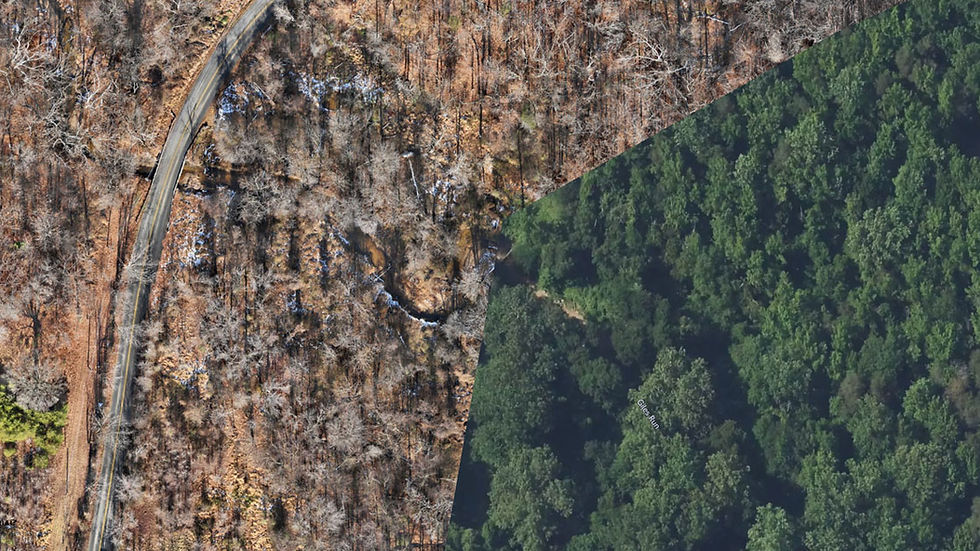
Winter "leaf-off" conditions are ideal for mapping and utility work. Without heavy foliage blocking the view, sensors capture more precise ground topography and structural details for 3D Digital Twin models. This transparency allows for a level of detail in land surveying and utility scans that is simply not possible during the high-growth summer months when thick canopies create "shadows" in the data.
By utilizing LiDAR and high-resolution photogrammetry during this window, we can penetrate the brush to reach the true "bare earth" surface. This provides engineers with a more accurate foundation for their projects, ensuring that designs are based on reliable data.
Winter Safety and Efficiency

Sending personnel onto frozen or snow-covered structures is a major liability that can lead to costly delays and workplace injuries. Remote inspection solutions provide a "boots-off-the-ground" alternative, allowing for comprehensive structural assessments from a safe distance.
From the Appalachian foothills to the coastal regions, mobile drone teams can deploy quickly to assess storm damage, ice accumulation, or structural integrity without putting human staff at risk on precarious surfaces. This high-speed deployment ensures that critical infrastructure stays online and safe, even when ground conditions are at their worst.
Year-Round Asset Protection
Maintenance shouldn't pause because of the calendar. By integrating predictive drone maintenance into your winter schedule, you catch small issues before they become spring disasters. The high-resolution imagery and thermal data captured during the winter months serve as an invaluable baseline for comparing wear and tear throughout the year.
This proactive approach allows property managers to prioritize their budgets and schedule repairs during the spring thaw, rather than reacting to emergency failures when the weather breaks. By planning ahead, you can ensure that your assets remain in top condition.
Winter Inspection FAQ Section
Can drones fly in freezing temperatures? Yes. Professional teams use specialized battery heaters and cold-weather protocols to operate safely in freezing temperatures.
Is thermal imaging better in the winter? Absolutely. The high contrast between indoor heat and outdoor cold makes thermal data significantly clearer than in warmer months.
Do you handle restricted airspace? As an SDVOSB, we are experienced in coordinating missions in complex environments, including highly regulated areas near national landmarks and federal sites.
Conclusion
In conclusion, winter is not just a season of cold; it is a time of opportunity for infrastructure maintenance. By leveraging the advantages of drone technology during these months, we can enhance safety, efficiency, and accuracy in inspections. This proactive approach not only protects assets but also ensures that projects are completed on time and within budget. Embracing winter drone inspections can lead to significant benefits for your operations, making it a smart choice for any facility manager or property developer.


Comments